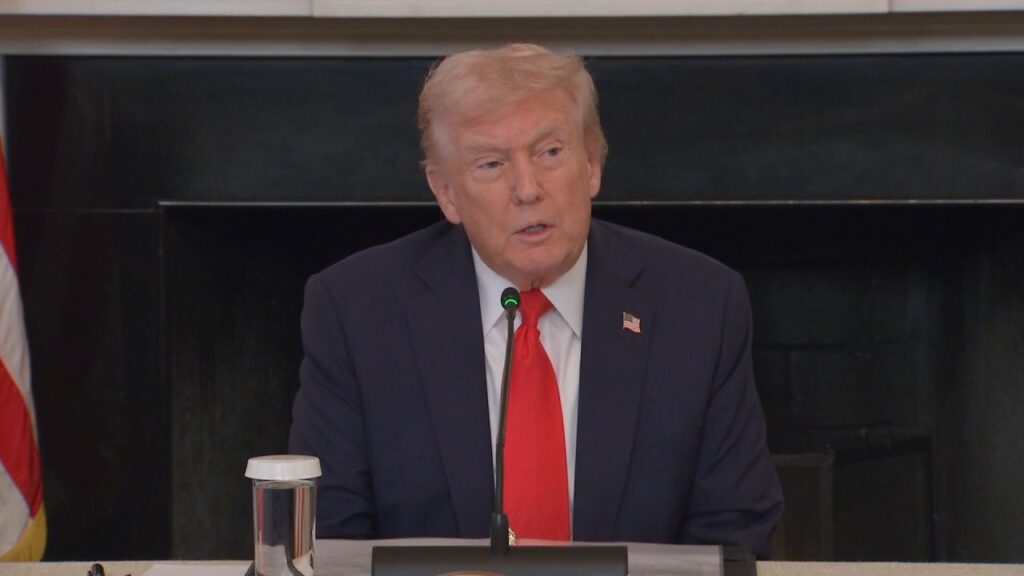
The United States President Donald Trump has stepped back into the global spotlight, claiming that Israel and Hamas have agreed to the “first phase” of a peace deal aimed at ending the Gaza war. His announcement, made through Truth Social posts and recent public remarks, marks one of his most significant attempts to re-engage in Middle East diplomacy since leaving office. While many details remain uncertain, Trump insists that the two sides are close to finalizing a ceasefire that would stop months of fighting and potentially open the door to a long-term peace process.
Trump said the agreement includes a ceasefire, an exchange of hostages and prisoners, and the gradual withdrawal of Israeli troops to an “agreed-upon line.” He declared that “all hostages will be released very soon,” adding that once Hamas officially confirms its acceptance of the plan, a ceasefire will “take effect immediately.” Reports from Reuters, The Associated Press, and Al Jazeera indicate that negotiations are ongoing in Cairo, where mediators are working on terms related to humanitarian aid, border access, and monitoring compliance. Trump described the talks as a “major breakthrough,” even suggesting that he might travel to the Middle East himself to oversee the next steps.
Behind Trump’s confident tone, however, lies a complicated and fragile situation. The proposed ceasefire represents just the first stage of a much larger peace process that would require both Israel and Hamas to make difficult concessions. Israeli officials have not publicly confirmed Trump’s statements, and some analysts believe his announcement may be more of a political move than a reflection of a finalized deal. Hamas leaders have responded cautiously, saying they welcome progress but still demand clear commitments on the release of Palestinian prisoners and reconstruction of Gaza. The negotiations remain tense, with both sides trying to balance domestic pressure, military strategy, and international expectations.
For Trump, the peace plan is also a political opportunity. As he positions himself for another presidential run, he’s presenting the Gaza talks as proof of his ability to “make deals” and restore global stability. His supporters see it as a return to the strong, decisive diplomacy they believe characterized his first term. Critics, on the other hand, accuse him of oversimplifying the conflict and using it to boost his campaign. They also point out that some of his previous policies—such as moving the U.S. Embassy to Jerusalem—helped inflame tensions that still shape the region today.
Meanwhile, in Gaza, the reality on the ground remains dire. After months of bombardment and displacement, civilians are desperate for relief. Aid organizations warn that any ceasefire will only matter if it leads to meaningful humanitarian access and long-term rebuilding. Negotiators in Cairo and Doha are working around the clock to finalize details, but progress is slow and fragile. Still, Trump’s announcement has stirred new attention and cautious hope. Whether this “first phase” becomes a genuine path to peace or fades into another failed attempt remains to be seen. For now, the world is watching closely as Trump once again places himself at the center of one of the world’s most volatile conflicts, promising to end it through sheer force of negotiation.

Bella Richardson is a dedicated journalist and news analyst known for her clear, thoughtful reporting and her ability to make complex stories accessible to a broad audience. With a Master of Science in Mass Communication, she brings both academic insight and real-world experience to her coverage of breaking news and trending topics throughout the United States.