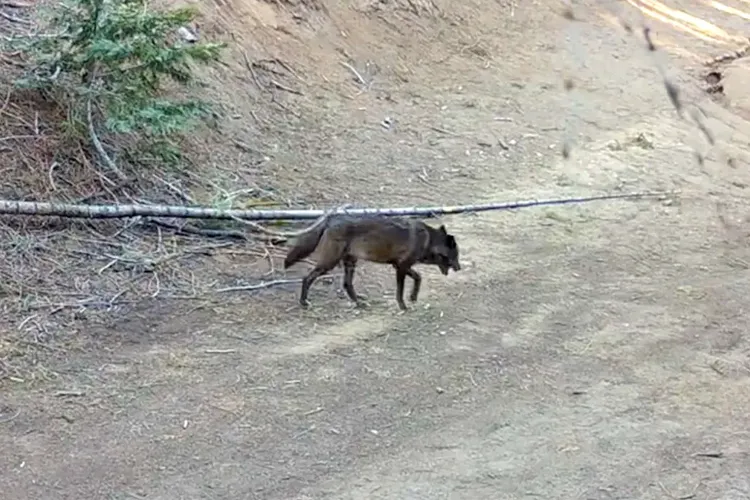
On a brisk morning earlier this month, something extraordinary happened in the rolling hills north of Santa Clarita. A gray wolf, majestic and elusive, was spotted in Los Angeles County for the first time in more than 100 years. The sighting surprised wildlife officials, conservationists, and nature lovers alike.
This was not just another wildlife photo opportunity. It was a historic moment marking the return of one of America’s iconic apex predators to a region where it had been absent for generations. For many, the wolf became a symbol of quiet persistence of nature.
The wolf, known by scientists as BEY03F, is a three-year-old female born in 2023 in the Plumas County region of Northern California. She is part of a lineage of wolves slowly reestablishing a foothold in the state thanks to decades-long conservation efforts and legal protections such as the Endangered Species Act.
But what happened next captured the imagination of many. Following her birth in the north, BEY03F traveled southward across mountains, valleys, and deserts on a journey of more than 370 miles from the Sierra Nevada to Southern California. She navigated challenging terrain, human development, and busy highways while being monitored via a GPS collar fitted last year.
On the morning of February 7, 2026, BEY03F’s collar data showed she had entered Los Angeles County, the southernmost point a gray wolf has been documented in California in modern times.
Gray wolves were once native throughout California, but by the 1920s they had been driven out through hunting, trapping, and habitat loss. The last officially confirmed wild wolf in Southern California was recorded in 1924, nearly a century ago.
BEY03F’s arrival in a landscape dominated by freeways and suburbs was historic. Her presence reminded people that wildlife can endure and return even to heavily urbanized areas.
Wildlife officials believe BEY03F is still searching for a mate and suitable territory. Wolves disperse naturally during their prime years to find compatible partners and establish new packs.
“As long as she is still on the move, it suggests she hasn’t yet found a mate or suitable habitat,” explained Axel Hunnicutt, gray wolf coordinator for the California Department of Fish and Wildlife.
Her nomadic instinct is both thrilling and uncertain, and it is part of what makes this story so compelling. BEY03F’s trek is about more than distance; it is about the future of her species in Southern California.
To scientists, BEY03F’s presence has broader implications. Gray wolves are a keystone species, animals that play an outsized role in shaping ecosystems. Their presence can help balance prey populations, influence vegetation growth, and even affect river behavior by controlling the movement of large herbivores.
Her arrival also raises questions about how humans and wildlife share space. Roads, development, and traffic pose real dangers, and vehicle collisions are one of the leading causes of wolf mortality in California.
As of now, BEY03F’s path winds through the ridges and valleys around Los Angeles. Will she find a mate? Will she continue deeper into Southern California or return north? No one knows for sure.
News Source: The Guardian

Dwayne Paschke is an experienced news reporter and media professional, currently working as a senior news analyst for a private media organization based in Toronto, Canada. With years of experience in journalism, he brings a wealth of knowledge to his role, where he contributes to Los Angeles Headlines by providing accurate and comprehensive coverage of significant news stories.